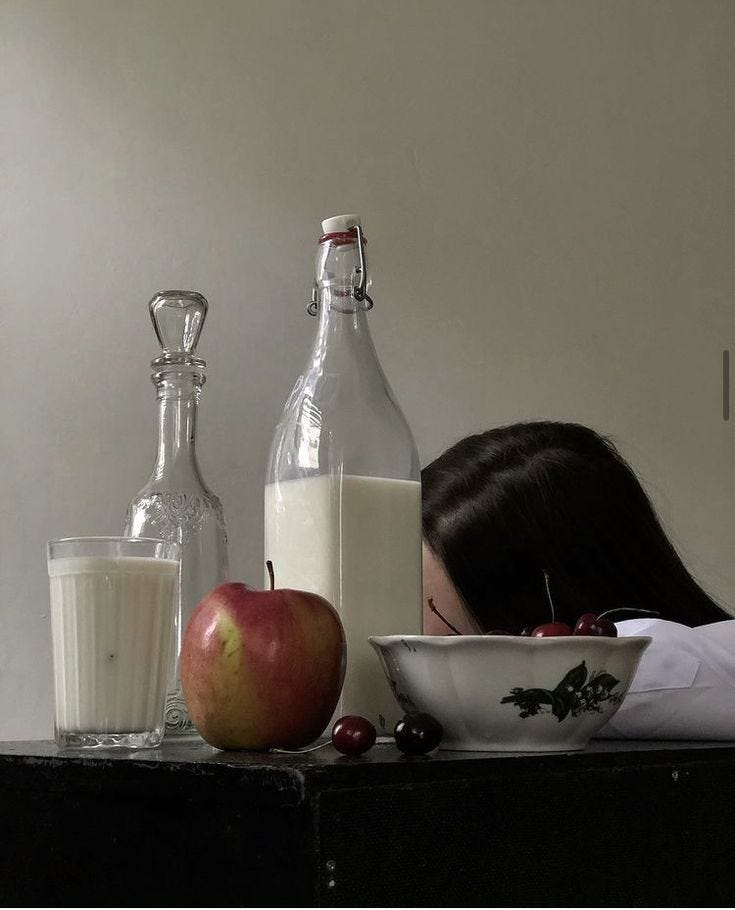
how to be alone
the art of solitude

hello.
i’ve always felt content being alone. i could stay occupied, inward, and move through my day without needing much from anyone else. for me, being alone didn’t register as a problem at first. but there were moments throughout my life when that ease tipped into something else and being alone stopped feeling neutral and started feeling like being left out.
when i was in third grade, the only thing i wanted more than my first pair of pointe shoes was to sit at the popular girls’ table at lunch. this painfully ordinary experience of wanting to be chosen by a specific group of people—wanting to be seen, understood, accepted in a very particular way is what most of us desire early on in life. and when you’re repeatedly excluded at a young age, it teaches you something about where you belong, and where you don’t.
what stayed with me was how something that feels like comfort when it’s chosen can start to feel heavy when it isn’t. and how being fine on your own doesn’t protect you from noticing when you’re no longer included.


being alone and being lonely aren’t the same thing, even though we treat them like they are. this confusion is part of why solitude scares people. loneliness points outward. it wants a person, a relationship, a version of life that isn’t here. there’s a pull to it. being alone doesn’t pull in the same direction because it puts you in your own company and stays there. the discomfort that shows up isn’t always about missing someone. a lot of the time it’s about realizing how unfamiliar you are to yourself.
loneliness hurts. being alone unsettles. loneliness feels like something has been taken from you. being alone feels like there’s nothing between you and your own thoughts. no audience or feedback. no one smoothing the edges.
because of that, we collapse the two experiences into one. any stretch of time spent alone becomes evidence that something is wrong either socially, romantically, or personally. but often the only thing wrong is that solitude hasn’t been practiced. we live in a culture that treats constant connection as proof of value, so unaccompanied time starts to feel like it needs to be fixed or filled or justified.
the rest of this newsletter is for paid subscribers.
below, i go deeper into what solitude actually asks of us, especially in winter. i write through fernando pessoa, introversion, structure, and the small, practical ways i keep loneliness from taking over when it shows up. i also share a short reading list that helped me understand the difference between solitude as refuge and solitude as risk. you can join us below.
thank you for being here, for supporting my work.
(follow ig, tiktok, youtube, pinterest and spotify for more)